
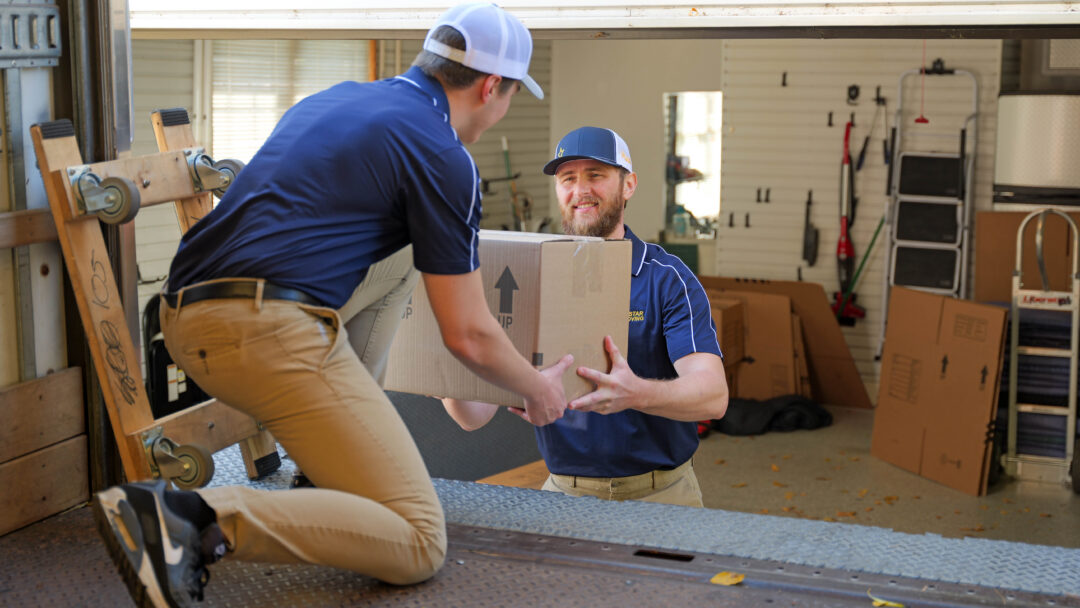
The garage is the last room most people think about when they start packing, and the first one to cause a meltdown on moving day. Tools, sports equipment, holiday bins, half-empty paint cans, lawn gear, mystery boxes from the last move you still haven’t unpacked. The garage is where organization goes to die.
But it doesn’t have to be that way! With a little strategy and the right approach, you can pack your garage efficiently, protect what matters, and arrive at your new home ready to actually use it.
Here’s how to tackle your garage.
Start with a Ruthless Purge
Before you pack a single thing, go through everything. The garage tends to collect items that have outlived their usefulness, and moving is the perfect time to cut the dead weight.
Sort everything into four piles:
- Keep — things you use and actually need
- Sell or donate — still good, just not yours to haul
- Trash — broken, outdated, or beyond saving
- Hazardous materials — see the section below
Be honest with yourself. If you haven’t touched the hedge trimmer in three years or the kids outgrew those bikes, don’t pay to move them. If you are downsizing, here we make that task simple with these six easy downsizing tips!
Handle Hazardous Materials First
This is the step most people skip. And it’s the most important one.
Many common garage items are considered hazardous and cannot be transported by a moving company, including:
- Gasoline and fuel canisters
- Paint, stains, and varnishes
- Fertilizers and pesticides
- Propane tanks
- Pool chemicals
- Batteries (certain types)
- Aerosol cans
Check with your local municipality for hazardous waste disposal options. The St. Louis area has periodic household hazardous waste collection events that make this easy. Plan to handle these items well before moving day so they’re not a last-minute scramble.
Gather the Right Supplies
Garage items are tough on standard moving boxes. These are the packing supplies you’ll want:
- Heavy-duty boxes in multiple sizes
- Plastic bins with lids for tools and hardware
- Bubble wrap and packing paper for sharp or fragile items
- Zip-lock bags for nuts, bolts, screws, and small parts to keep them organized
- Stretch wrap for bundling long-handled tools
- Permanent markers and labels — you will thank yourself later
- Original boxes if you still have them for power tools, lawn equipment, etc.
Pack by Category, Not by Location
The biggest garage packing mistake is grabbing things at random and cramming them into boxes. Instead, group similar items together and pack them as a unit.
Tools and hardware: Wrap sharp tools individually in packing paper. Secure blades with cardboard sleeves. Put all loose hardware — screws, bolts, nails — into labeled zip-lock bags before boxing. Consider a plastic bin over a cardboard box for this category.
Power tools: Use original boxes when possible. If you don’t have them, wrap cords separately, remove batteries before packing, and make sure moving parts are secured.
Lawn and garden equipment: Drain all fuel from gas-powered equipment before the move. Clean mower blades and trimmer heads. Bundle rakes, shovels, and brooms with stretch wrap or bungee cords.
Sports equipment: Deflate balls to save space. Group by sport or by family member. Use bags or bins for oddly shaped gear.
Holiday and seasonal storage: If it’s already in labeled bins, great — just make sure the lids are secure. If it’s not, now’s the time to get organized before the hustle and bustle of the holidays arrive.
Automotive supplies: Check for leaks or spills before packing. Bag and label anything that could drip.
Label Everything Like You Mean It
Every box and bin that comes out of your garage should be labeled on at least two sides with:
- What’s inside (be specific — “tools” is useless; “hand tools — wrenches, screwdrivers” is useful)
- Where it goes in the new home
- Any handling notes (heavy, fragile, this side up)
Color-coded labels by category work even better if you want to go the extra mile.
Think About What Goes in the Moving Truck Last
Garage items are often the heaviest things you own. Your movers will generally want to load them first so they ride on the bottom. But communicate with your moving crew about what you’ve got. Oversized or specialty items (riding mowers, large workbenches, floor-standing equipment) may need to be noted in advance.
If you have items that need to stay accessible on move-out day like cleaning supplies or the last of the trash bags, then keep those separate and load them last.
Give Yourself More Time Than You Think You Need
If the rest of your house takes a weekend, plan a full extra day for the garage alone. It’s not just the packing you have to tackle. It entails decision-making, the hazardous material disposal, the decluttering, and the sheer volume of stuff most garages hold. Start early, stay organized, and don’t try to do it the night before the movers show up.
Let All-Star Moving Handle the Heavy Lifting
Packing the garage is the hard part. We do offer pro-level packing services, but if you need to declutter yourself, then this article was your guide! The actual moving? That’s also where we come in.
All-Star Moving has been helping St. Louis families relocate with less stress and more confidence for years. From careful loading to on-time delivery, we treat your belongings — garage and all — like they’re our own.
Ready to get started? Contact All-Star Moving today for a free quote and let’s make your next move your easiest one yet.
